
A paper from the collection
The manual was part of the interface
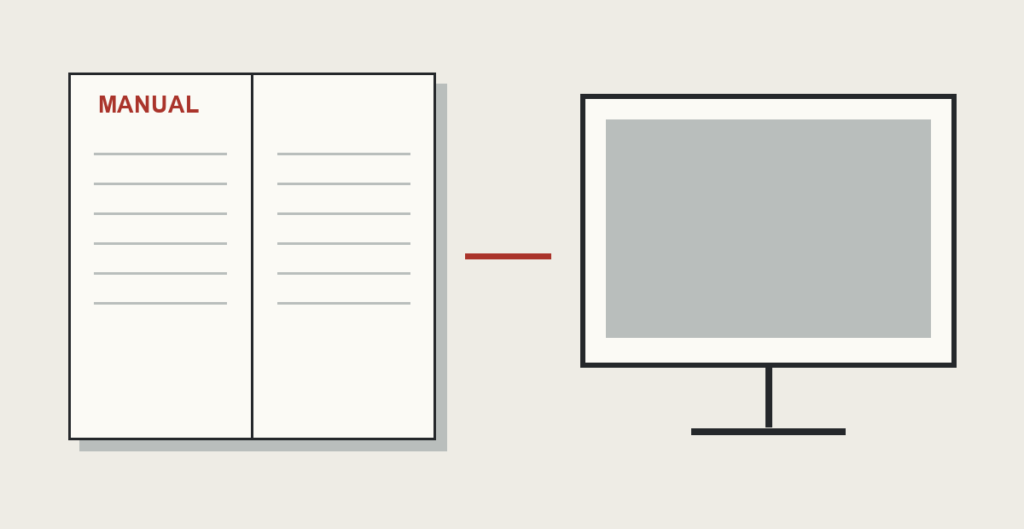
When a game expects a player to consult a separate document, the interface extends beyond the screen. A key reference, a diagram or a tutorial in print can carry information that a later player encounters only as a missing assumption.
Reading a manual alongside a game therefore asks a different question from judging the menu alone. Which actions are explained outside the software? What vocabulary must the player learn? Does the document describe a process, or merely list controls? These questions can reveal how the intended first encounter was organised.
Do not mistake an instruction for an observation
A manual describes intended behaviour. It does not prove that every released build behaved exactly that way. When documenting an apparent difference, identify the edition of both the software and the manual. Leave room for localisation, revision or an error in either source.
An archive note can record the cover title, edition markings, language, page count and provenance of the copy. A photograph of your own copy may still include copyrighted artwork; ownership of the object is not a blanket licence for public reproduction. Where an authorised digital manual exists, linking to it can be more useful than offering an unverified mirror.
Preserving the context of the manual helps explain what a game asked from its audience. It also prevents a modern review from treating every missing on-screen explanation as something that was never explained anywhere.
A source to add or a distinction to improve?
Write to the journal →