
A paper from the collection
Waiting can be a game mechanic, or just waiting
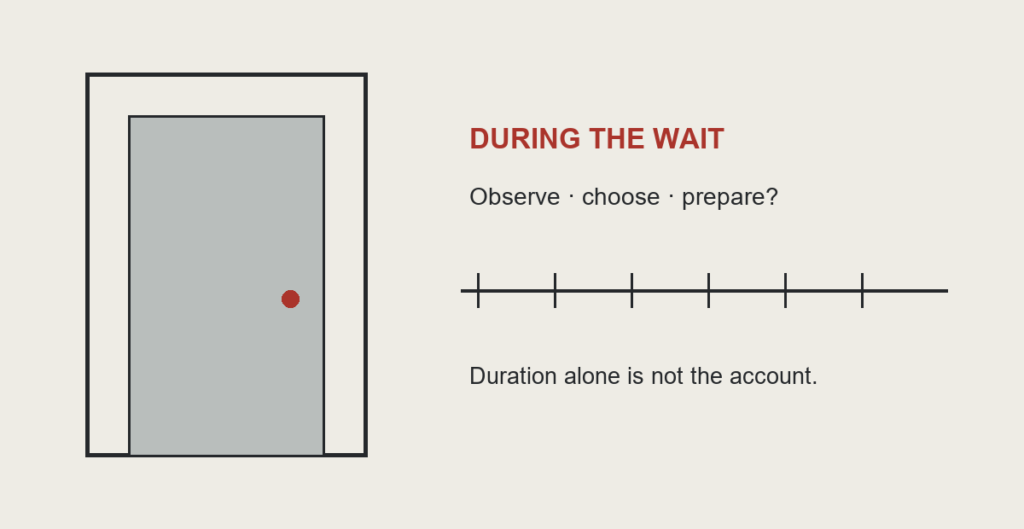
Two games can ask a player to remain still for the same length of time and produce very different experiences. In one, the pause allows a decision. In another, nothing meaningful is available to consider. Duration alone does not explain the difference.
A useful analysis asks what information arrives during the interval and which choices remain open. Can the player listen, observe a changing space, communicate or prepare a route? Is the end of the wait predictable? Does a decision made beforehand affect what happens next? These are design questions, not an argument that slower play is inherently better.
Consider an invented encounter in which a door opens after a delay. If the player can choose a position and hear an approaching character, the delay may create anticipation. If no choice or information is available, the same delay may feel like an interruption. Neither description proves how every player will respond.
In a retrospective, describe the actual sequence before applying a label such as “tactical”. Explain what the pause permits and what it removes. The strongest account can recognise both the intended tension and the inconvenience without forcing one verdict on the entire experience.
A source to add or a distinction to improve?
Write to the journal →